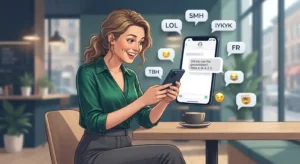
Relationship texting means using text messages to build, maintain, or manage a personal or romantic relationship. It can include everyday check-ins, affection, flirting, planning, emotional support, and difficult conversations.
Key Takeaways
- Relationship texting is a communication term, not a standard texting acronym.
- It describes how people use texts to stay connected while dating or in a relationship.
- The tone can be romantic, affectionate, playful, friendly, practical, or serious.
- A person’s texting frequency alone does not prove romantic interest or commitment.
- Context matters because texts do not include facial expressions or vocal tone.
- Common related terms include dry texting, double texting, ghosting, breadcrumbing, and love bombing.
Relationship Texting Meaning in Text
Relationship texting refers to text-based communication used to develop, maintain, or navigate a relationship. Although the phrase can apply to friendships and other personal connections, online discussions often use it in the context of dating and romantic relationships.
It can include simple messages such as “How’s your day going?”, affectionate texts like “Miss you,” conversations about plans, flirting, emotional support, or discussions about relationship problems.
The phrase is best understood as a descriptive term, rather than internet slang or a texting abbreviation. It does not have a universally recognized shortened form.
Relationship texting can happen through regular SMS or messaging services, DMs, and group chats. The meaning of an individual message depends heavily on the relationship, previous conversation, wording, timing, and surrounding context.
What Does Relationship Texting Stand For?
Relationship texting does not stand for a specific acronym or fixed phrase.
Unlike abbreviations such as “LOL” or “BRB,” it is simply a descriptive expression combining relationship and texting. It describes communicating with someone through text as part of maintaining or developing a personal connection.
If someone says, “We need to work on our relationship texting,” they generally mean the way the two people communicate with each other through messages.
How Is Relationship Texting Used?
Relationship texting can serve several purposes depending on where the relationship stands.
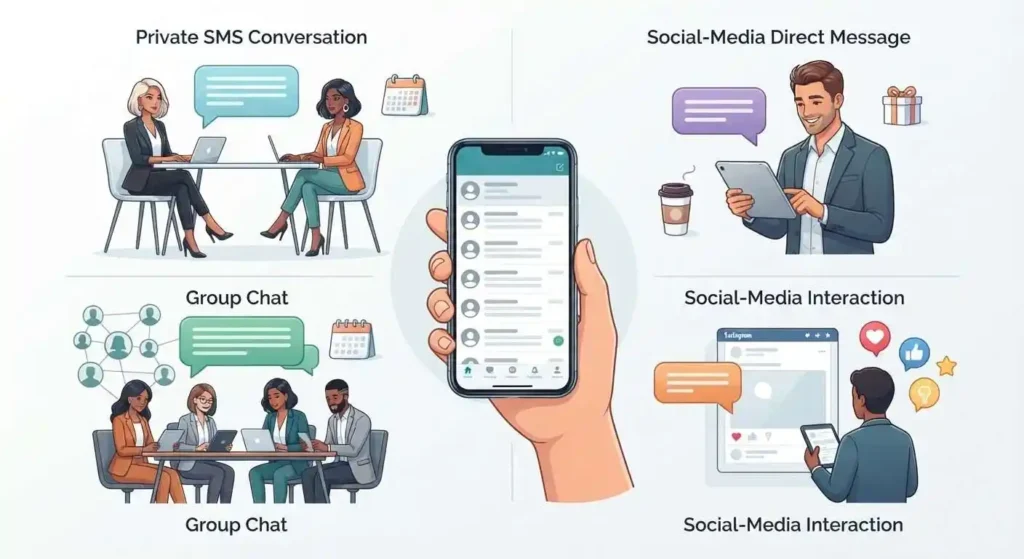
Text Messages
Partners may text throughout the day to share updates, make plans, check in, or show affection.
DMs
Someone who is dating or getting to know another person may use direct messages to start conversations, flirt, or continue a connection outside of in-person meetings.
Group Chats
Relationship-related communication can also happen in group chats, especially when partners or friends are discussing plans, events, or shared activities.
Social Media
Comments, reactions, replies, and private messages can become part of how people communicate with someone they are dating or already know well.
The important point is that relationship texting describes the role texting plays in the connection, not a particular type of message.
Relationship Texting in Different Contexts
The same text can feel completely different depending on who sends it and what happened before it.
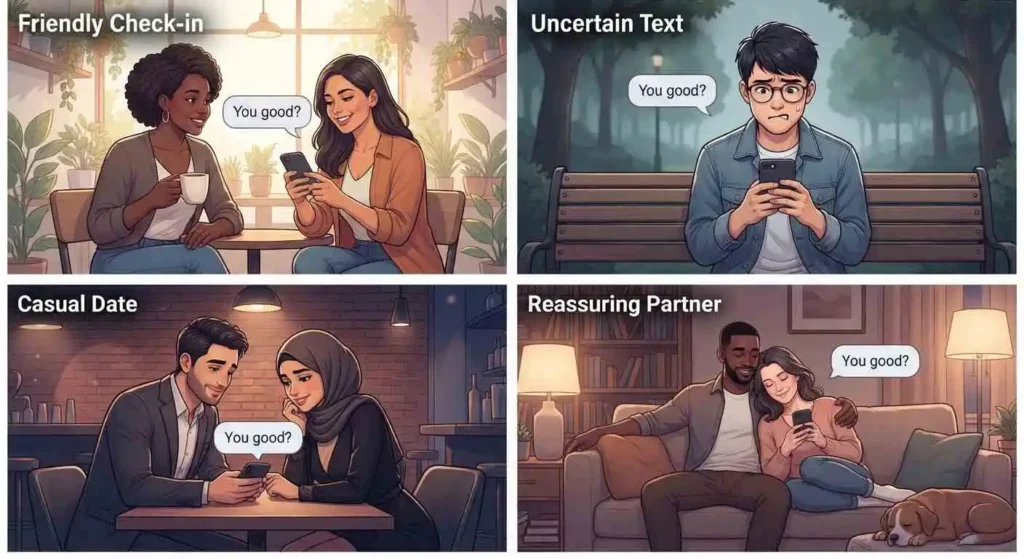
From a Friend
A friend texting “You good?” may simply be checking on you. It does not automatically carry romantic meaning.
From a Guy
A text from a guy can be friendly, romantic, practical, or casual. His gender alone does not determine what the message means.
From a Girl
The same applies to a text from a girl. The message should be interpreted through the conversation and existing relationship rather than gender stereotypes.
From a Crush
If a crush sends affectionate or playful messages, the conversation may feel more romantic, but one message still cannot establish their intentions with certainty.
In Dating
Texting during dating may involve getting to know each other, making plans, flirting, sharing daily experiences, and deciding whether to continue seeing each other.
In a Relationship
Established partners may use texting for affection, practical coordination, emotional support, jokes, reminders, and everyday conversation.
In a Group Chat
Messages may be more casual because other people are part of the conversation. A private message can carry different meaning from the same words posted publicly.
When a message seems confusing, consider the previous messages, wording, punctuation, emojis, response pattern, relationship, and topic before assigning an emotional meaning to it.
Real Chat Examples
Here are realistic examples of relationship texting in different situations:
- Check-in: “How’s your day going so far?”
- Affection: “Just wanted to say I’m thinking about you.”
- Planning: “Want to grab dinner after work?”
- Dating: “I had a really good time with you last night.”
- Flirting: “Okay, that picture definitely got my attention.”
- Support: “Good luck with your presentation today. You’ve got this.”
- Daily update: “Made it home. Traffic was awful.”
- Affectionate joke: “You officially owe me coffee for that.”
- Missing someone: “Wish you were here right now.”
- Making plans: “Are we still on for Saturday?”
- Reassurance: “We’re okay. Let’s talk when we both have a minute.”
- Apology: “I’m sorry about how I handled that conversation.”
- Serious conversation: “Can we talk about what happened earlier?”
- Casual relationship chat: “What are you watching tonight?”
- Good morning: “Morning. Hope you slept well.”
- Good night: “Sleep well. Talk tomorrow.”
- Long-distance connection: “Tell me about your day. I want to hear everything.”
- New dating connection: “I’m enjoying getting to know you.”
- Emotional support: “You don’t have to deal with that alone.”
- Playful: “So are you finally admitting I was right?”
- Relationship planning: “Let’s figure out what we’re doing this weekend.”
- Checking in after conflict: “Are you ready to talk about it?”
- Simple affection: “Miss you ❤️”
- Practical: “Can you text me when you get there?”
- Conversation starter: “What’s one good thing that happened today?”
These examples show that relationship texting is broader than flirting. It can include ordinary conversation, emotional connection, planning, reassurance, and conflict management.
How to Reply to Relationship Texting
Because relationship texting describes a broad type of communication, the best reply depends on the actual message you received.
Casual Replies
- “Yeah, my day’s been pretty good. How about yours?”
- “Sounds good. What time?”
- “Haha, that actually made me laugh.”
- “I’ll let you know when I’m free.”
Friendly Replies
- “Thanks for checking in. I appreciate it.”
- “That sounds like a good plan.”
- “Hope your day goes well too.”
- “I’m glad you told me.”
Funny Replies
- “Wow, look who finally texted me.”
- “I was wondering when you’d admit I was right.”
- “That sounds suspiciously like a compliment.”
- “Okay, I’ll allow it this time.”
Neutral Replies
- “Got it.”
- “That works for me.”
- “Let me think about it.”
- “We can talk about it later.”
Flirty/Relationship Replies
- “I was hoping you’d text me.”
- “You’re making it hard not to smile at my phone.”
- “I’d rather tell you that in person.”
- “Sounds like you owe me a date.”
What Tone Does Relationship Texting Have?
Relationship texting does not have one fixed tone.
Depending on the conversation, it can be:
- Casual — everyday updates and quick questions
- Friendly — supportive or conversational messages
- Playful — jokes, teasing, and humor
- Romantic — affection, compliments, and emotional closeness
- Flirty — playful romantic interest
- Direct — making plans or discussing expectations
- Serious — talking about conflict, boundaries, or feelings
- Context-dependent — meaning changes according to the relationship and conversation
Text messages can also be misread because they do not provide the same facial expressions, voice tone, or body language available during an in-person conversation. That makes surrounding context especially important.
Is Relationship Texting Rude or Offensive?
No. Relationship texting itself is neither rude nor offensive. It simply describes communication through text.
It is generally appropriate for casual conversations, friendships, dating, and established relationships. However, the content of the message determines whether communication is respectful.
For school, work, or other professional settings, casual relationship-style texting may not be appropriate unless the situation calls for personal communication. Professional messages should generally use clearer and more formal language.
Sensitive relationship issues can also become confusing over text. If a conversation involves serious conflict or strong emotions, a phone call or face-to-face conversation may sometimes communicate the situation more clearly.
Other Meanings of Relationship Texting
There is no major alternative technical, gaming, financial, medical, or business meaning that needs to be attached to the phrase in ordinary texting.
The most useful distinction is between relationship texting as a general communication practice and specific texting behaviors that can occur within dating or relationships.
For example, “relationship texting” is the broad category, while dry texting describes a particular communication style.
Common Mistakes About Relationship Texting
Assuming Daily Texting Means Commitment
Someone may text you every day without the relationship being clearly defined. Frequency is only one part of communication.
Treating Slow Replies as Proof of Disinterest
A delayed response can have many explanations, including work, sleep, responsibilities, or simply different texting habits. A pattern may provide more context than one delayed reply.
Assuming Short Texts Always Mean Something Is Wrong
A message such as “okay” or “sure” can be completely ordinary in one conversation and feel cold in another.
Assuming Texting Proves Romantic Interest
Flirting can suggest interest, but texting alone cannot establish someone’s feelings with certainty.
Reading One Message in Isolation
The messages before and after a confusing text can change its meaning significantly. Look at the broader conversation instead of treating one sentence as definitive.
Expecting Both People to Text Identically
People have different communication styles. One person may enjoy frequent messages while another prefers shorter conversations and more in-person interaction.
Relationship Texting and Related Slang
| Term | Meaning | Common Use |
|---|---|---|
| Dry texting | Sending short or low-detail messages that may feel unengaged | Dating and everyday chats |
| Double texting | Sending another message before receiving a reply | Dating and casual messaging |
| Ghosting | Suddenly stopping communication without an explanation | Dating and relationships |
| Breadcrumbing | Sending occasional attention without providing clear or consistent relationship progress | Dating |
| Love bombing | Excessive attention, affection, or grand gestures, especially early in a relationship | Dating and relationships |
| Situationship | A romantic or sexual connection without a clearly defined relationship | Dating |
These terms describe particular behaviors or relationship situations. They are not alternative definitions of relationship texting.
People Also Ask About Relationship Texting
Does relationship texting mean you are dating?
Not necessarily. Relationship texting can happen between friends, family members, people who are dating, and established romantic partners. The phrase describes the communication style rather than confirming the relationship status.
How often should couples text each other?
There is no universal number of texts that works for every couple. What matters more is whether both people are comfortable with the communication pattern and whether their expectations are understood.
Does texting every day mean someone likes you?
Daily texting can show that someone enjoys communicating with you, but it does not automatically prove romantic attraction. Look at the broader pattern, including how they communicate and behave outside of texting.
Is texting important in a relationship?
Texting can help partners stay connected, share everyday experiences, coordinate plans, and offer support. However, healthy relationships involve communication in different forms, not only through messages.
What does dry texting mean in a relationship?
Dry texting generally refers to brief, low-detail replies that make a conversation feel less engaged. It can happen for many reasons, so a few short messages do not automatically mean someone has lost interest.
Is double texting bad in a relationship?
Double texting is not automatically bad. Sending another message can be perfectly normal when you have something else to say; the context and expectations between the two people matter.
Can texting cause misunderstandings in relationships?
Yes. Text removes many nonverbal cues, so a short or ambiguous message can be interpreted differently by the sender and recipient. Clarifying what someone meant can prevent unnecessary conflict.
Conclusion
Relationship texting means using text-based communication to build, maintain, or navigate a personal or romantic relationship. It is not a standard acronym and has no fixed full form.
It can include everyday check-ins, flirting, affection, planning, emotional support, jokes, and serious conversations. Its tone may be casual, friendly, romantic, playful, or serious depending on the situation.
The key is context. Texting frequency, short replies, emojis, or delayed responses should not automatically be treated as proof of attraction, rejection, commitment, or conflict. The broader conversation and the relationship between the people provide the clearest meaning.

Mila Parker brings three years of writing experience to the craft of puns, jokes, and concise wordplay. Her subject range moves through food, animals, seasonal themes, technology, entertainment, and trending topics. She studies relevant terminology, connects words through double meanings and associations, then adjusts setups and punchlines to keep each joke clear and well structured.