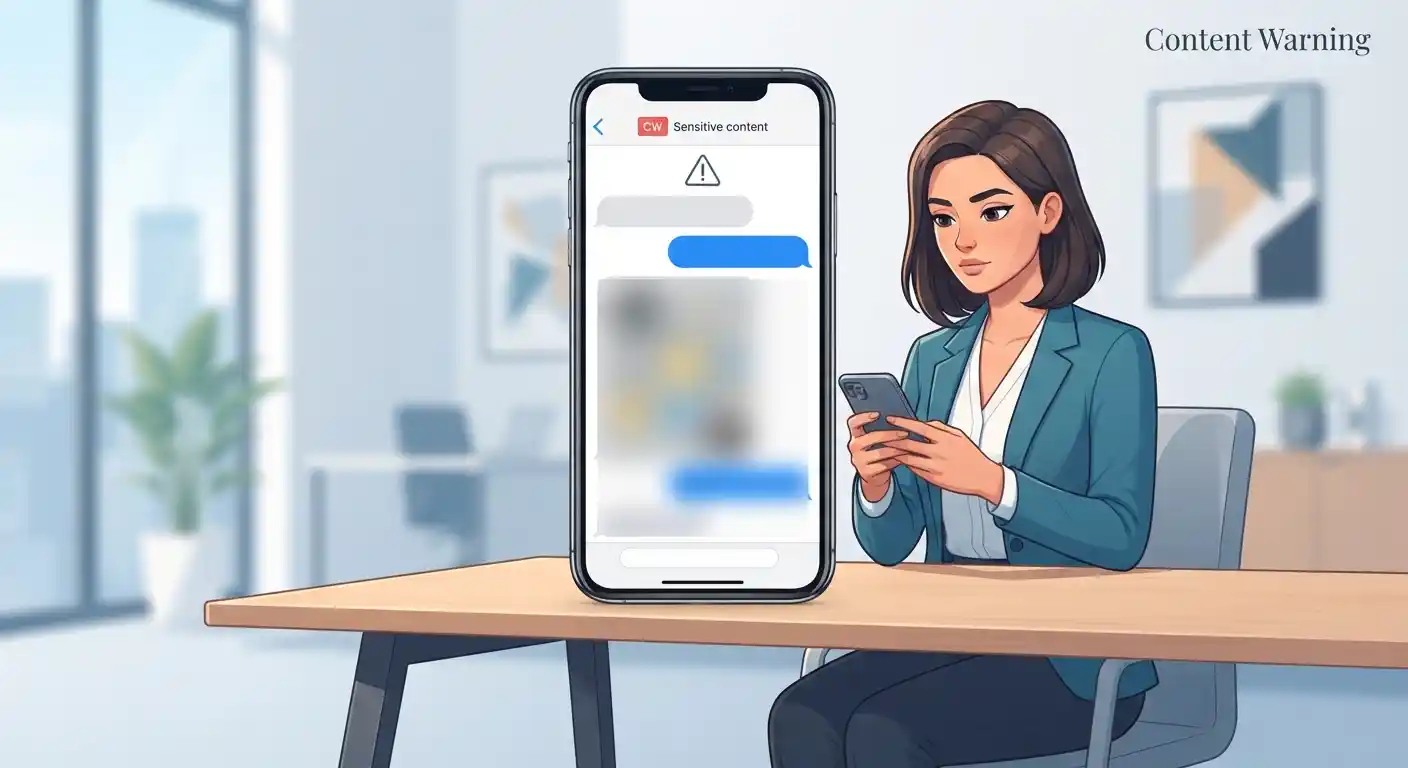
Content warning (CW) means a notice that upcoming content may be upsetting, disturbing, offensive, or sensitive to some people. It is commonly used before posts, videos, articles, books, movies, and other media so people can decide whether they want to continue.
Key Takeaways
- Content warning alerts people that material may contain sensitive or disturbing topics.
- CW is the common abbreviation for “content warning” in online communication.
- It can appear in social media posts, DMs, forums, videos, books, classrooms, movies, and other media.
- A content warning does not necessarily mean the material is inappropriate; it tells you what type of content to expect.
- Content warning and trigger warning are closely related and are sometimes used interchangeably.
- The exact reason for a warning depends on the material, such as violence, sexual content, abuse, self-harm, death, or graphic imagery.
Content Warning Meaning in Text
In texting and online communication, content warning means a notice placed before potentially sensitive material. People may write “CW,” “Content Warning,” or “CW: [topic]” before sharing something that could be upsetting or uncomfortable.
For example:
CW: graphic violence — This post discusses a violent scene from the movie.
The warning gives readers information before they encounter the material. It can help someone decide whether to keep reading, watching, or scrolling.
Content warnings are used across social media, education, entertainment, literature, and other forms of communication.
What Does CW Mean?
CW means “content warning.” In online spaces, it is often placed immediately before a sensitive topic.
Examples include:
- CW: violence
- CW: death
- CW: animal injury
- CW: sexual assault
- CW: self-harm
- CW: graphic images
The abbreviation keeps the warning short while still signaling that the following material may require extra consideration.
What Does Content Warning Stand For?
Content warning stands for exactly what it says: a warning about the content that follows.
Unlike many texting abbreviations, content warning is not an acronym created from a longer phrase. The commonly used abbreviation CW comes from the initial letters of content and warning.
A content warning may identify a specific topic or simply state that the material contains potentially distressing content. Its purpose is to give people advance notice rather than surprise them with sensitive material.
How Is Content Warning Used?
Content warnings can appear in several types of communication.
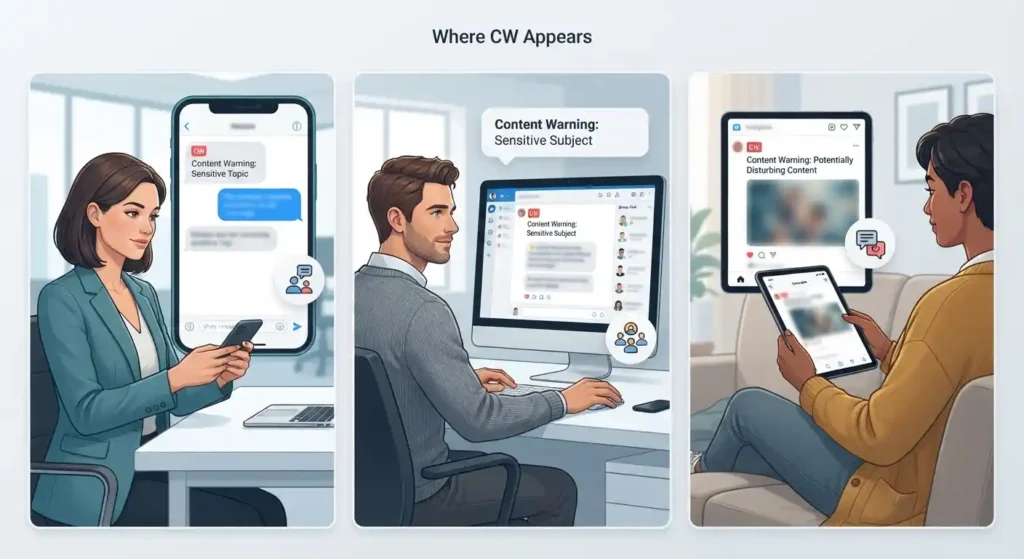
Text Messages and DMs
Someone might use a warning before sending a disturbing photo, discussing a traumatic event, or describing something graphic.
“CW: injury. I’m going to explain what happened.”
Social Media Posts
A person may place CW at the beginning of a post before discussing a sensitive subject.
“CW: grief — This anniversary has been difficult for me.”
Group Chats
In a group conversation, a warning can let members know that the next message may involve a difficult subject.
“CW: spoilers and death.”
Comments and Online Communities
People may use content warnings when replying to a discussion involving violence, abuse, medical issues, or other sensitive subjects.
Books, Movies, and TV
Content warnings can also appear before entertainment or educational material. A warning may mention subjects such as violence, nudity, strong language, or disturbing scenes.
Content Warning in Different Contexts
The meaning stays essentially the same, but the context determines what the warning refers to.
From a Friend
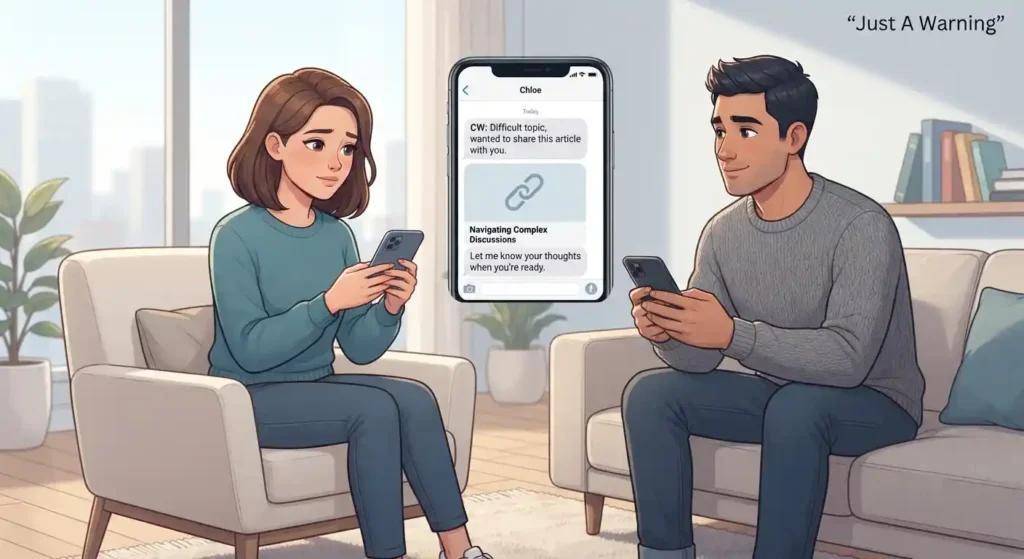
If a friend says “CW: this gets pretty sad,” they are preparing you for emotional material.
From a Guy or Girl
If someone sends “CW: graphic image,” the phrase itself does not indicate flirting, attraction, or romantic interest. It is simply a warning about what comes next.
From a Crush
A crush using “CW” before a message does not automatically carry romantic meaning. The surrounding conversation determines whether anything more personal is being communicated.
In Dating
Someone might use a content warning before discussing a difficult personal experience, relationship issue, abuse, or another sensitive subject.
In a Relationship
Partners may use warnings before discussing emotionally difficult experiences. The warning itself is about the subject matter, not necessarily about the relationship.
In a Group Chat
A content warning can help people decide whether they want to continue reading a potentially disturbing message.
In Social Media Comments
Someone may write “CW: spoilers” before revealing an important event in a movie, show, book, or game. Here, the warning is about avoiding spoilers rather than emotional distress.
Real Chat Examples
Here are realistic ways content warning or CW can appear in online communication:
- “CW: violence. The next scene gets pretty intense.”
- “Just a CW before you open that link: there are graphic photos.”
- “CW: spoilers for the finale.”
- “Content warning for anyone sensitive to medical images.”
- “CW: discussion of grief.”
- “Heads up, CW for animal injury in this video.”
- “CW: sexual assault is discussed in this thread.”
- “I added a CW before the post so nobody gets surprised.”
- “Content warning: this story involves a character’s death.”
- “CW for strong language before you watch this clip.”
- “There’s a content warning at the beginning of the documentary.”
- “CW: self-harm is mentioned below.”
- “Putting a CW here because the picture is pretty graphic.”
- “Content warning: this chapter contains descriptions of violence.”
- “CW: bugs, if you’re uncomfortable with them.”
- “I should probably add a content warning before sharing this.”
- “CW: disturbing imagery in the second photo.”
- “There’s a spoiler warning, but also a CW for violence.”
- “Content warning before we get into the details.”
- “CW: difficult family situation mentioned below.”
How to Reply to Content Warning
Because content warning is usually a notice rather than a question, you normally do not need to reply to the warning itself. If someone sends you a warning before sharing something, your response can acknowledge it or tell them whether you are comfortable continuing.
Casual Replies
- “Got it.”
- “Thanks for the heads-up.”
- “Okay, I’m prepared.”
- “Thanks for warning me.”
Friendly Replies
- “I appreciate the warning.”
- “Thanks for letting me know first.”
- “That’s helpful, thank you.”
- “I’ll keep that in mind.”
Funny Replies
- “Warning received. Proceeding carefully.”
- “Okay, I have been officially warned.”
- “My curiosity has been notified.”
- “All right, I’m mentally prepared.”
Neutral Replies
- “Understood.”
- “Thanks for the notice.”
- “I’ll skip this one.”
- “I’m okay with continuing.”
Flirty/Relationship Replies
A content warning itself does not require a flirty response. If the surrounding conversation is already romantic, you can respond naturally:
- “Thanks for the warning, babe.”
- “I’m listening if you want to talk about it.”
- “You can tell me when you’re ready.”
What Tone Does Content Warning Have?
Content warning is generally neutral, informative, and considerate.
The phrase itself is not inherently rude, sarcastic, romantic, or playful. Its tone can become more casual when shortened to CW, especially in social media posts, group chats, and online communities.
For example:
- “Content warning: graphic images.” — neutral and direct
- “CW: this gets intense.” — casual
- “Just a CW before you continue.” — friendly and considerate
The tone ultimately depends on the surrounding message.
Is Content Warning Rude or Offensive?
No. Content warning is not inherently rude or offensive. It is generally used to give people advance notice about potentially sensitive material.
It is appropriate in casual online conversations, social media, educational settings, entertainment, and other contexts where sensitive material may appear.
In professional or formal communication, a more specific phrase such as “Warning: This material contains graphic images” may be clearer than the abbreviation CW, particularly when the audience may not know the shorthand.
Other Meanings of Content Warning
Content warning has one dominant meaning. It is primarily a descriptive phrase for a notice about potentially sensitive, disturbing, or upsetting material.
It is not normally used as a separate technical, financial, medical, or gaming acronym. The abbreviation CW, however, can have other meanings in unrelated contexts, so context matters when someone writes only “CW.”
For example, in a school conversation, workplace message, or technical discussion, CW could potentially refer to something other than content warning. You should use the surrounding conversation to determine the intended meaning.
Common Mistakes About Content Warning
Assuming CW Always Means the Same Thing
CW commonly means “content warning,” but the abbreviation can have other meanings in unrelated contexts. If the message is unclear, look at the surrounding conversation.
Thinking a Warning Means the Content Is Forbidden
A content warning does not automatically mean that something is prohibited or inappropriate for everyone. It simply alerts people to what they may encounter.
Assuming It Means Someone Is Triggered
The person adding a content warning does not necessarily have a personal reaction to the subject. They may simply want to alert other readers before sharing sensitive material.
Assuming It Shows Romantic Intent
If someone sends “CW” in a conversation with a crush, boyfriend, girlfriend, or potential date, the abbreviation itself does not prove romantic interest.
Confusing It With a Spoiler Warning
A content warning and spoiler warning can overlap, but they serve different purposes. A spoiler warning protects someone from learning important plot information, while a content warning alerts them to potentially sensitive material.
Content Warning and Related Slang
| Term | Meaning | Common Use |
|---|---|---|
| CW | Content warning | Social media, chats, posts |
| TW | Trigger warning | Sensitive or potentially distressing content |
| Spoiler warning | Alert that important plot information follows | Movies, TV, books, games |
| NSFW | Not safe for work | Adult, explicit, graphic, or workplace-inappropriate material |
| Content note | A note describing potentially sensitive material | Books, articles, education, media |
CW and TW are closely related. They are sometimes used interchangeably, although some people use trigger warning more specifically for material that could evoke a trauma-related reaction.
People Also Ask About Content Warning
What does CW mean in text?
CW means “content warning” in many online conversations. It is placed before material that may contain sensitive, disturbing, or upsetting content.
What does content warning mean on social media?
On social media, a content warning tells viewers that a post, image, video, or discussion contains potentially sensitive material. It gives people a chance to decide whether they want to continue.
Is CW the same as trigger warning?
They are closely related and are often used interchangeably. Some people use trigger warning more specifically for material that may cause a trauma-related reaction, while content warning can be broader.
What is an example of a content warning?
An example is “CW: graphic violence.” It tells the reader that the material following the warning includes violent or graphic content.
Is a content warning the same as a spoiler warning?
No. A spoiler warning tells someone that important story information is about to be revealed. A content warning identifies potentially sensitive or disturbing material.
Can CW have another meaning?
Yes. CW can represent different phrases in different contexts. When it appears before sensitive online content, however, content warning is the natural interpretation.
Does content warning mean the content is offensive?
Not necessarily. A warning means that some people may find the material upsetting, disturbing, sensitive, or offensive. It does not mean everyone will react negatively to it.
Conclusion
Content warning means a notice that alerts people to potentially sensitive, upsetting, disturbing, or offensive material. Its common online abbreviation is CW, and it can appear in texts, DMs, social media posts, comments, books, videos, movies, classrooms, and other forms of communication.
The phrase is generally neutral and informative rather than rude or romantic. CW and TW are closely related, while spoiler warnings serve a different purpose. When you see CW, check the words that follow it and the surrounding conversation to understand exactly what the warning refers to.

Mila Parker brings three years of writing experience to the craft of puns, jokes, and concise wordplay. Her subject range moves through food, animals, seasonal themes, technology, entertainment, and trending topics. She studies relevant terminology, connects words through double meanings and associations, then adjusts setups and punchlines to keep each joke clear and well structured.